Saturday, 30 April 2016

The Hindu Editorial 1, 30 April 2016

Topic - Fed affords RBI wiggle room


The U.S. Federal Reserve has left interest rates unchanged for a third straight meeting, citing a moderation in economic growth in the world’s largest economy. The Federal Open Market Committee will next meet on June 14, and with Wednesday’s decision it has provided policymakers at the Reserve Bank of India with just a little more elbow room when they decide on monetary action at their June 7 sitting. The U.S. is the largest market for Indian exporters, and some of the economic indicators spotlighted by the Fed will help them gauge the strength of demand for their goods and services.

Thursday, 28 April 2016

Daily Current Affairs- 28 April 2016

The Hindu Editorial 2, 29 April 2016

Topic - More noise than light


Regrettably, though perhaps not surprisingly, the debate in Parliament on the 2010 AgustaWestland helicopter deal produced more noise than light. The real issues relating to this controversial deal are somewhat self-evident, even if they were swamped [ दलदल में फँसाना ] by the furious and self-serving cut and thrust of words exchanged between BJP and Congress MPs. To begin with, the fact that a Milan appeals court has convicted two former top officials — of Finmeccanica and its helicopter subsidiary AgustaWestland — of corruption and over-invoicing in connection with the agreement to sell 12 VVIP helicopters to India cannot be brushed aside as trifling[ तुच्छ ] or irrelevant,

The Hindu Editorial 1, 29 april 2016

Topic - Another missed opportunity

hindu editorial with vocab

This week’s meeting between the Indian and Pakistani Foreign Secretaries in Delhi served as a reality check on the stalemate [गतिरोध ] in the bilateral dialogue. Meeting on the sidelines of the Heart of Asia conference, the two officials failed to find common ground to kickstart the Comprehensive Bilateral Dialogue process, or even agree on a timetable. Both countries have now officially confirmed that the talks bore no results. In Parliament on Thursday, the government referred to the talks that lasted 90 minutes as a “courtesy call”; and Pakistan Foreign Secretary Aizaz Chaudhry said “no breakthrough” had emerged from his meeting with S. Jaishankar.

The Hindu Editorial 2, 28 April 2016

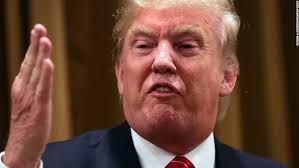
Topic - The United States of Trumperica

The United States of Trumperica

The march of Donald Trump towards securing the Republican presidential nomination has assumed an air of inevitability [ अनिवार्यता ]. The billionaire property mogul and Grand Old Party frontrunner scored a major victory in Tuesday’s primary elections in five northeastern States. His delegate count now soars at 949, compared to 544 for Senator Ted Cruz from Texas, and 153 for Ohio Governor John Kasich. The response of the panicked GOP mainstream has been feeble [ कमजोर ]. The idea of holding a “contested convention” to thwart [नकाम बनाना ] Mr. Trump and the plan for Mr. Cruz and Mr. Kasich to collude [ सांठ-गांठ करना ] in the remaining primary races do not appear to be retarding Mr. Trump’s momentum.

The Hindu Editorial 1, 28 April 2016

Topic - More medicine for less

Editorial daily

The Centre is reported to be in favour of moving a bill requiring doctors to prescribe generic medicines in place of costly, branded ones. This progressive step, which will reform the way essential medicines are distributed to patients, was recommended by the Planning Commission’s High Level Expert Group on Universal Health Coverage five years ago. Among its suggestions is a system of bulk [ विस्तार ] procurement [ वसूली ] of important drugs from quality generics manufacturers through Central and State-level supply logistics corporations and their distribution through Jan Aushadhi outlets. Given the large size of India’s pharmaceuticals market, and the vested interests in favour of the status quo on price and distribution, it has taken inordinately long to move to low-cost generic medicines on a large scale. There is also a lack of awareness on the availability of affordable alternatives to expensive brands. A recent assessment of India’s expenditure on health published by The Lancet showed that out-of-pocket spending comprises 58 per cent of the total; two-thirds of this is on drugs. What makes the situation difficult even for relatively better-off patients who can afford commercial health insurance is that risk cover is generally confined to part payment of hospitalisation bills, but not prescription medicines. The poor are impoverished further by drug costs. It is vital, therefore, that governments act on multiple fronts — making listed essential medicines available free or nearly free to all in hospitals through higher public spending, widening access to generics through Jan Aushadhi outlets, and closely monitoring professional practice to eliminate prescription of irrational, non-essential drugs that have no curative effect.

Tuesday, 26 April 2016

The hindu Editorial 2, 27 April 2016

Topic - The Malegaon reminder

malegaon reminder

    On September 8, 2006, three bombs shattered [तबाह करना ] the calm in Malegaon town on the occasion of Shab-e-Baraat, a day when believers are out and about late in the evening. A mosque was attacked, and the intent was immediately clear: to create inter-community tension. The Maharashtra Anti-Terrorism Squad arrested a group of Muslim men from Malegaon and Mumbai. This week, all nine accused have been acquitted[ बरी करना ] by a special MCOCA court, which said there was not sufficient ground to proceed against them. It is, at one level, evidence of the balance of justice weighing in on the side of the innocent, though how to recompense [बदला चुकाना ] a person for five years of wrongful confinement [ कारावास ] in jail is a question the judicial system must grapple with. In fact, one of the nine passed away last year. At another level, events over the intervening decade string together a narrative that this country has still not come to grips with. The questions it frames are best set against the chronology [ घटनाक्रम ]of events after that Shab-e-Baraat evening. As terror attacks hit the Samjhauta Express near Panipat (February 2007), the Mecca Masjid in Hyderabad (May 2007), the Ajmer Dargah (October 2007), and then Malegaon once again in September 2008, it eventually became clear that the investigating agencies were on the wrong track in pursuing the accused for these incidents.

The Hindu Editorial 1, 27 April 2016

Topic - The curious case of Mr. Isa’s visa

Mr. Isa's visa

The decision to revoke [ वापस लेना ] the visa issued to Chinese dissident [मतभेद करनेवाला] Uyghur leader Dolkun Isa has averted [ टालना ] a bigger diplomatic face-off [ सामना करना ] with Beijing. It has also put an uncomfortable spotlight on the Central government’s handling of such a sensitive issue. There is, first, the question of how Mr. Isa’s application slipped through the cracks of India’s much vaunted [ दिखावा ] ‘e-visa’ system. If, indeed, as the government now claims, the visa approval was inadvertent [ बेपरवाह ], then it must be investigated how the system did not flag an application from a person with a Red Notice from Interpol. Second, the episode exposes a failure of coordination between the External Affairs and Home Ministries and the intelligence agencies, which failed to detect and vet applications of all those seeking to attend a high-profile conference in Dharamsala, with participants representing Taiwan and the Tibet and Uyghur regions. While India prides itself on support to groups fighting for freedom of expression around the world, it also has a stringent [ कड़ी से कड़ी ] system of scrutiny for those entering the country. On the other hand, if, as sources in the government were quoted widely as saying, the visa decision was deliberate [ जानबूझकर ] and meant to be a response to China blocking a proposed United Nations ban on Masood Azhar,